 Chelsea AI Ventures
graph-of-skills-claude-plugin
0 stars MarkdownA Claude Code plugin for Graph-of-Skills. It connects the agent to the skill lookup service and adds one short skill that tells the agent to check for a written method before unfamiliar work.
Guías prácticas, artículos y herramientas para su camino en la IA
Publicamos un artículo casi todas las semanas en el boletín de Chelsea AI sobre qué funciona en la IA en producción y qué no. Aquí se agrupan en cuatro temas, junto con apariciones en pódcast y sesiones grabadas, cada uno con un resumen para que sepa si le merece la pena antes de salir de la página. Debajo están los libros de nuestro director y nuestras charlas.
Cuatro hilos recorren todo lo que publicamos. Cada uno reúne los artículos sobre una parte de lo que hacemos.
Dónde la inversión en IA se rentabiliza y dónde se atasca.
18 artículos
Recuperación, evaluación, agentes y modelos abiertos en producción.
14 artículos
Trabajo con supervisión humana, competencias y adopción de IA en el equipo.
10 artículos
Superficie de ataque, privacidad y rendición de cuentas de los sistemas de IA.
4 artículos
Nuestros programas integrales de formación se basan en la experiencia práctica de implementación presentada en libros superventas escritos por nuestro equipo
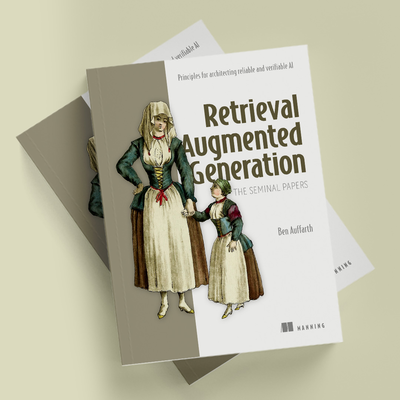
Published: March 2026 | New Release
Principles for architecting reliable and verifiable AI
Retrieval Augmented Generation (RAG) is a standard process for grounding LLM prompts in user-specified content rather than relying only on a model’s training data. RAG has grown from a simple prompt engineering workflow into a sophisticated set of data analysis, storage, and retrieval techniques. Retrieval Augmented Generation, The Seminal Papers explores foundational research papers that explain why RAG works, how it’s built, and what makes it different from other approaches.

Published: May 2025 | Amazon Bestseller in Programming
Build production ready LLM applications and advanced agents using Python and LangGraph
A practical guide to leveraging LangChain and LangGraph for GenAI implementation, with real-world examples ranging from customer support to data analysis. The 2025 edition features updated code examples and improved GitHub repository.
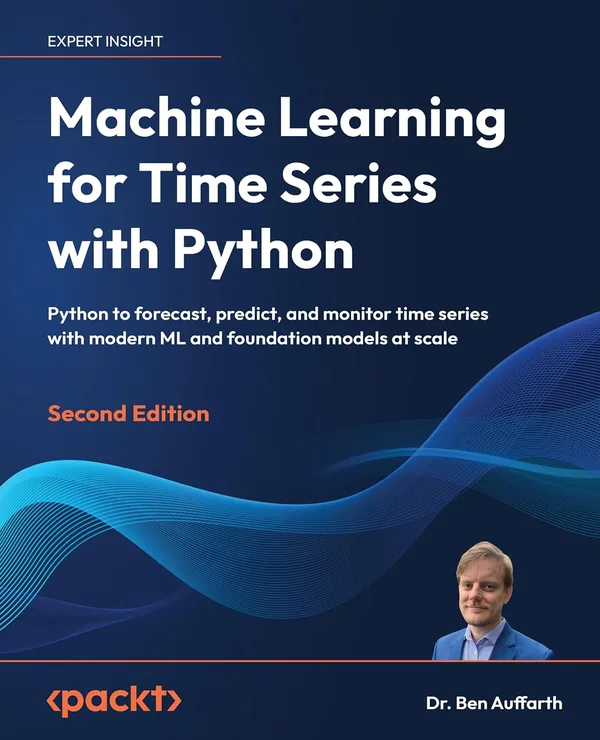
Published: 2026 | New Edition
Python to forecast, predict, and monitor time series with modern ML and foundation models at scale
Forecasting and time-series modelling in Python, updated with conformal prediction, causal inference, hierarchical models, and time-series foundation models.
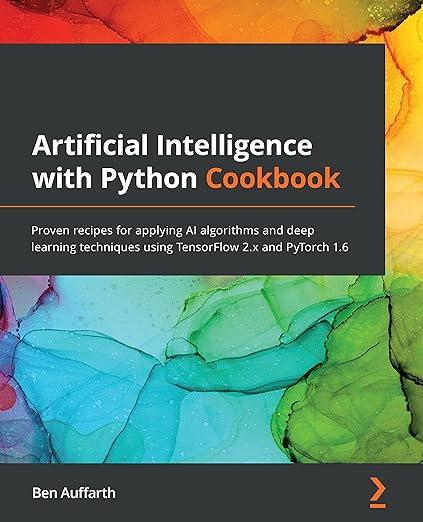
Published: October 2020 | BookAuthority Best-Seller
Proven recipes for applying AI algorithms and deep learning techniques
Proven recipes for applying AI algorithms and deep learning techniques using TensorFlow and PyTorch. The practical cookbook approach provides ready-to-use solutions for common AI challenges, from computer vision to natural language processing, with complete code examples and detailed explanations of implementation considerations.
Todo esto es público en GitHub y de uso libre. Las herramientas nacen de proyectos de consultoría. El resto es el código que acompaña a los libros.
A Claude Code plugin for Graph-of-Skills. It connects the agent to the skill lookup service and adds one short skill that tells the agent to check for a written method before unfamiliar work.
A self-driving agent loop for Claude Code. It turns an issue description into a workplan, implements it one task at a time, runs the verification commands the project already uses, fixes what fails, and commits as it goes.
Human-in-the-loop for LangGraph. A workflow pauses, asks a person to fill in a form, and resumes with their answers, talking to KirokuForms over the Model Context Protocol.
Notebooks working through the papers that retrieval augmented generation is built on, one implementation per paper.
Companion to Retrieval Augmented Generation: The Seminal Papers, Manning 2026
Code for building LLM applications and agents with Python, LangChain and LangGraph, covering the examples in the book end to end.
Companion to Generative AI with LangChain, 2nd Edition, Packt 2025
Forecasting and time-series modelling in Python, updated with conformal prediction, causal inference, hierarchical models, and time-series foundation models.
Forecasting and time-series modelling in Python, from classical methods through to deep learning.
Companion to Machine Learning for Time Series, Packt 2021
Recipes across the breadth of applied AI in Python: supervised and unsupervised learning, probabilistic modelling, computer vision, language and speech.
Companion to Artificial Intelligence with Python Cookbook, Packt 2020
Packt Publishing, 2026
Focus: RAG listo para producción sobre modelos abiertos pequeños: búsqueda híbrida y reranking, recuperación correctiva, evaluación con RAGAS y modelos de guardrail abiertos
DataFest Tbilisi 2025
Focus: Taller sobre canalizaciones de agentes en cascada, salida estructurada con gramáticas, barreras de seguridad y evaluación con un conjunto de referencia en CPU local
Ver la página del eventoDataFest Tbilisi 2025
Focus: Del uso de API públicas a modelos de código abierto en infraestructura propia, y dónde encajan los modelos de lenguaje pequeños
Ver la página del eventoPut Generative AI to Work 2023, ODSC 2024, Data Science Week Amsterdam
Focus: LLMs de código abierto e implementación empresarial
PyData London 2023
Focus: Mesa redonda sobre tecnologías de IA de código abierto
RE•WORK, 2023
Focus: Decenas de pruebas A/B simultáneas en una plataforma propia, con poco sesgo y menor demora
Ver la grabaciónPyData Bristol 2023
Focus: Extracción de características, previsión y detección de anomalías en series temporales con Python
Ver las diapositivasUniversity of Oxford 2023
Focus: Clase invitada en el curso Artificial Intelligence: Cloud and Edge Implementations
Data & Analytics Summit EU 2022
Focus: Estrategia empresarial de IA y hojas de ruta de implementación
ODSC 2022
Focus: Técnicas de aprendizaje automático para datos de series temporales
DataFest Tbilisi 2019
Focus: Dónde funciona el aprendizaje automático en producción y dónde falla
Apariciones en pódcast:
¿Busca ponente para una conferencia, una sesión interna o un podcast? Aceptamos algunos al año, sobre IA generativa, MLOps y series temporales. Escríbanos