
AI Resources
Practical guides, articles and tools for your AI journey
Knowledge Center
We've compiled a collection of resources to help you navigate the complex world of AI implementation. From technical guides to strategic insights, these materials reflect our practical approach to delivering business value through AI.
Latest Insights
View all on Substack →Monetisation of AI
In the late 1990s, the concept of a burn rate was used to justify the stocks of loss-making companies. Investors prioritised user growth over earnings, assuming that profitability would follow once the market was captured. We are seeing this pattern again in the generative AI sector. OpenAI generated 13 billion dollars in 2025, yet
Know your Artificial Intelligence (AI)
Artificial Intelligence or AI isn’t just a buzzword anymore, and it most definitely is not something reserved for the future. It’s already here, woven into our daily lives in ways we often don’t even notice. It’s everywhere!
Capability Densing in LLM Systems
There is an important paper, which is about smaller language models. It has a few implications that are also quite important. It’s about the increase in capability per parameter in large language models over time, called Densing. Densing makes smaller models more competitive and CPU deployment more realistic even for tasks that depend on generative capa…
The 10 Commandments for Brain-Friendly AI Use
We’ve all been witnessing the rise of powerful chatbots that shocked all of us with this spark of language that we thought only humans are capable of and there was a lot to learn and to catch up on. One of the most powerful things however was to learn about human value in the world and about things that you can’t automate.
Learning with AI without the Brain Drain
Let’s face it: Chatbots and LLMs can speed up extracting and synthesising information a lot. It’s like when Wikipedia just came out and was widely discouraged as an authoritative source for research. Today, we are slowing coming to terms with what AI can do for us, and we are finding out
The Verification Tax: Why AI Projects Stall
Large Language Models (LLMs) are sold on a promise of leverage: they let individuals do more, faster, with less friction. In software and knowledge work, the pitch is that AI collapses the cost of creation.
The Skeptical AI Playbook
The honeymoon phase of Generative AI is over. We are now entering the Implementation Gap—that frustrating valley between the viral demo your CEO saw and the broken prototype your engineering team is currently debugging.
The Economic Case Against Autonomous Agentic AI
The promise of agentic AI is seductive. It suggests a move from simple text generation to autonomous research and long-horizon problem-solving, which involves a lot of decisions. We expect a digital worker that plans, executes, and corrects its own work. For businesses, automating tasks that are laborious and repetitive can help save on labour costs an…
Agents and AI in 2026
It’s the end of 2025 and time for an end of year summary and some predictions.
Evaluation-Driven Development
I frequently speak with teams at large companies where the mandate comes from the top. The boss tried ChatGPT, found it intuitive, and now expects an autonomous agent that solves complex workflows. The technical team has been trying it for months, the reliability is poor - even if the accuracy is acceptable (which is rarely seems to be), it fails specta…
Fully Agentic AI Is Not Viable Today
The evidence is overwhelming across domains. As a model takes more steps, its reliability falls. As we grant it more autonomy, it fails more often. Agent demos may look intelligent, but real evaluations paint a harsher picture.
Stop Just Watching. Start Building AI
In his book from 2008, Lawrence Lessig famously described two types of culture. He called them “Read-Only” and “Read-Write”. Radio is a perfect example of Read-Only culture. A few professionals broadcast the signal and you listen. You cannot change the show nor can you talk back. The flow of information goes one way. Lawrence Lessig argues that this cha…
The Right to Be Let Alone
Privacy is the moral space individuals need to think, choose, and become themselves. It is not simply a legal checklist or a mechanism for compliance. It is a fundamental moral right that protects our capacity for autonomy. Without a private sphere, we cannot freely form beliefs or pursue our own conception of a good life. This understanding of privacy …
The Internet Is Drowning in Slop
The internet has a problem. There’s a flood of low-quality, machine-generated text that now fills search results. It is grammatically correct. It is also boring, repetitive, and obviously fake. Users are learning to spot it instantly. They hate it and when they see it on your website, they leave.
The Hype vs. The Reality
We are deep in an AI Hype Cycle. The potential for AI to automate human labour is a subject of profound societal interest and concern. We constantly hear claims about AI’s rapid progress on complex reasoning benchmarks, which has fuelled a narrative that a new wave of “agentic AI” is ready to automate large parts of the workforce.
You x You i
We built a tool that tells you exactly why your website visitors are leaving. We’ve built lots of different reports that use AI and different kind of heuristics, and a detailed dashboard that shows you problems and recommendations. Now, we need your help to test it.
Why Open-Source LLMs are the Future of Enterprise AI
ChatGPT has been a turning point in technological innovation. Even though other commercial providers have been catching up and overtaken OpenAI in a few areas, it was when ChatGPT entered the scene was when people took notice of the potential of AI. While the initial phase of AI adoption was characterized by renting generic capabilities from a handful o…
Reality Check for AI
GPT-5 Is Here, and My Clients Are... Underwhelmed
AI's Reality Check: Where the Revolution Isn't Happening
According to analysts at Morgan Stanley, Goldman Sachs, and McKinsey & Company AI was going to massively redefine more than the work force within a few years automating tasks and replacing a number of jobs. The predicted ranges of displacement or disruption still vary widely.
How to Build AI-First Systems with Human Guidance
Today, AI is no longer just an “assistant” to humans—it’s rapidly becoming the core executor within systems. Cosimo Spera and Garima Agrawal propose flipping the traditional “human-led, AI-assisted” paradigm; build AI-First systems, where AI leads and humans provide strategy, ethics, and oversight in the loop.
Why 42% of companies are abandoning their AI projects
Remember when everyone was getting fired because of AI? Plot twist: the robots are still figuring out how to fill out expense reports.
Human in the Loop
Imagine you’ve asked an AI model to draft a critical business proposal, and it generates a complete—but subtly off—document. Without a human reviewing it, that small misalignment could lead to missed opportunities or misunderstandings. This is where Human in the Loop (HITL) becomes not just helpful, but essential.
Beyond the Algorithm
As a Maths student at Imperial working through problem sheets, coding labs, and club activities, I’ve noticed AI assistants becoming part of my daily routine. Within minutes, the AI suggested a corrected loop structure, recommended vectorised NumPy operations, and even drafted clear comments.
How to make AI perform better?
Why Prompt Precision Matters
Why should you be careful with AI?
Have you come across this experience? Reading through social media, found most of the posts are obviously LLM-produced. This seems to be the trend: social media platforms like ‘LinkedIn’ and ‘X’ have AI integrated for writing posts.
Do you need 700 engineers to make money with AI?
Recently, Builder.ai, a company founded in London and backed by Microsoft whose valuation relied on their revolutionary coding AI Natasha, was discovered to use 700 Indian engineers instead of an AI. Moreover, these engineers, it seems, often churned out rather buggy code. They are also accused of having inflated their revenue figures.
Beyond Basic RAG
Retrieval-Augmented Generation (RAG) has evolved dramatically since its introduction in 2020. While simple implementations can deliver impressive results, today's most challenging use cases demand more sophisticated approaches. In this article, I'll show you how to leverage LangGraph—a powerful extension to the LangChain ecosystem—to build advanced RAG …
Beyond ChatGPT: Enterprise LLM Integration Best Practices
Practical strategies for moving beyond simple ChatGPT usage to sophisticated enterprise LLM applications. Learn how to address common challenges like context management, security, and evaluating outputs at scale.
Unlocking Deeper Reasoning in LLMs: Introducing Atom of Thought (AoT)
Large Language Models (LLMs) have made impressive strides in understanding and generating text. Yet, when it comes to tackling complex, multi-step problems, traditional prompting methods like Chain-of-Thought (CoT) can fall short.
Books by Our Team
Our comprehensive training programs are built on practical implementation experience featured in bestselling books authored by our team
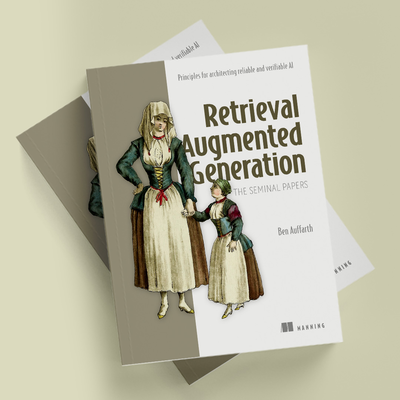
Retrieval Augmented Generation, The Seminal Papers
Published: March 2026 | New Release
Principles for architecting reliable and verifiable AI
Retrieval Augmented Generation (RAG) is a standard process for grounding LLM prompts in user-specified content rather than relying only on a model’s training data. RAG has grown from a simple prompt engineering workflow into a sophisticated set of data analysis, storage, and retrieval techniques. Retrieval Augmented Generation, The Seminal Papers explores foundational research papers that explain why RAG works, how it’s built, and what makes it different from other approaches.
Focus areas include:
Generative AI with LangChain (2nd edition)
Published: May 2025 | Amazon Bestseller in Programming
Build production ready LLM applications and advanced agents using Python and LangGraph
A practical guide to leveraging LangChain and LangGraph for GenAI implementation, with real-world examples ranging from customer support to data analysis. The 2025 edition features updated code examples and improved GitHub repository.
Focus areas include:
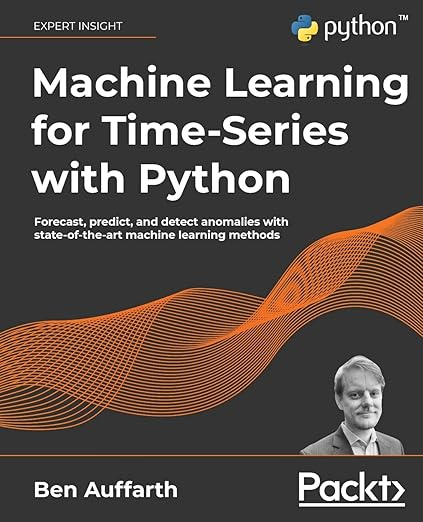
Machine Learning for Time Series
Published: October 2021 | Industry Standard Reference
Forecast, predict, and detect anomalies with state-of-the-art machine learning methods
Use Python to forecast, predict, and detect anomalies with state-of-the-art machine learning methods. This comprehensive guide covers everything from data preprocessing to advanced models for time-dependent data. The included tutorials range from simple forecasting to complex deep learning architectures for time series analysis.
Focus areas include:
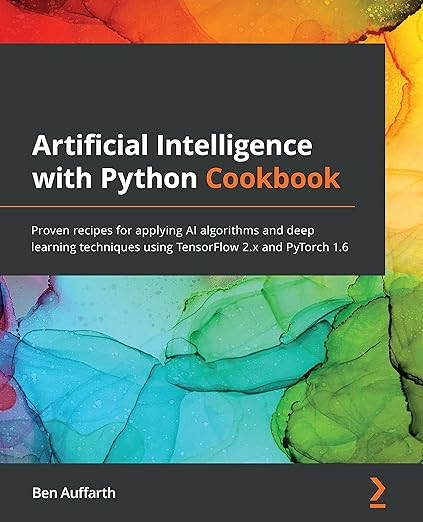
Artificial Intelligence with Python Cookbook
Published: October 2020 | BookAuthority Best-Seller
Proven recipes for applying AI algorithms and deep learning techniques
Proven recipes for applying AI algorithms and deep learning techniques using TensorFlow and PyTorch. The practical cookbook approach provides ready-to-use solutions for common AI challenges, from computer vision to natural language processing, with complete code examples and detailed explanations of implementation considerations.
Focus areas include:
Speaking & Education
Moving Beyond Statistical Parrots: LLMs and Their Tooling
ODSC 2024, Data Science Week Amsterdam
Focus: Open-source LLMs and enterprise implementation
Time-Series in Python -- Preprocessing and ML
ODSC 2022
Focus: Machine learning techniques for time-series data
Strategic AI Implementation
Data & Analytics Summit EU 2022
Focus: Enterprise AI strategy and implementation roadmaps
Future of Data Science and LLMs
PyData London 2023
Focus: Panel discussion on open-source AI technologies
Stay Updated
Subscribe to our newsletter for the latest AI insights, resources, and training updates.
By subscribing, you agree to receive emails related only to AI training and implementation. We respect your privacy and will never share your information with third parties. Unsubscribe at any time. View our full Privacy Policy