 Chelsea AI Ventures
 KI-Ressourcen
Praktische Leitfäden, Artikel und Werkzeuge für Ihre KI-Reise
Wir veröffentlichen fast jede Woche einen Artikel im Chelsea-AI-Newsletter darüber, was in produktiver KI funktioniert und was nicht. Diese sind hier zusammen mit Podcast-Auftritten und aufgezeichneten Sessions nach vier Themen sortiert, jeweils mit einer Zusammenfassung, damit Sie vor dem Klick einschätzen können, ob sich die Lektüre lohnt. Darunter stehen die Bücher unseres Direktors und unsere Vorträge.
Nach Thema stöbern
Vier Themen ziehen sich durch alles, was wir veröffentlichen. Jedes sammelt die Artikel zu einem Teil unserer Arbeit.
-
Strategie & ROI
Wo sich KI-Investitionen auszahlen und wo sie stocken.
15 Artikel
-
LLM- & Agenten-Engineering
Retrieval, Evaluation, Agenten und offene Modelle im Produktivbetrieb.
14 Artikel
-
Team & Kompetenz
Arbeiten mit Human-in-the-Loop, Kompetenzen und die Einführung von KI im Team.
10 Artikel
-
Sicherheit & Governance
Angriffsfläche, Datenschutz und die Nachvollziehbarkeit von KI-Systemen.
4 Artikel
Bücher unseres Teams
Unsere umfassenden Schulungsprogramme basieren auf praktischer Implementierungserfahrung, die in Bestseller-Büchern unseres Teams vorgestellt wird
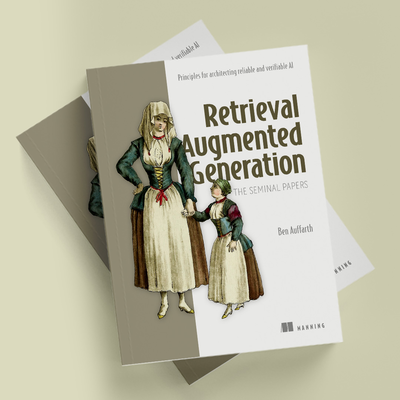
Retrieval Augmented Generation, The Seminal Papers
Published: March 2026 | New Release
Principles for architecting reliable and verifiable AI
Retrieval Augmented Generation (RAG) is a standard process for grounding LLM prompts in user-specified content rather than relying only on a model’s training data. RAG has grown from a simple prompt engineering workflow into a sophisticated set of data analysis, storage, and retrieval techniques. Retrieval Augmented Generation, The Seminal Papers explores foundational research papers that explain why RAG works, how it’s built, and what makes it different from other approaches.
Focus areas include:

Generative AI with LangChain (2nd edition)
Published: May 2025 | Amazon Bestseller in Programming
Build production ready LLM applications and advanced agents using Python and LangGraph
A practical guide to leveraging LangChain and LangGraph for GenAI implementation, with real-world examples ranging from customer support to data analysis. The 2025 edition features updated code examples and improved GitHub repository.
Focus areas include:
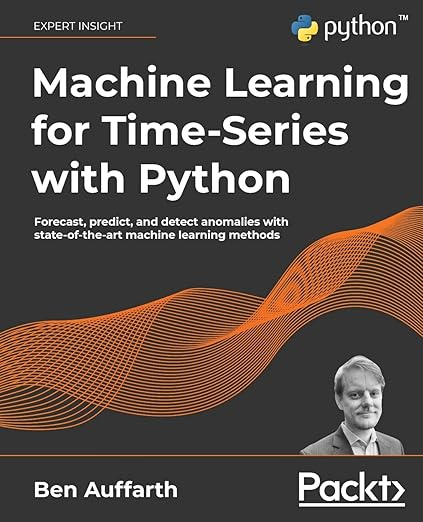
Machine Learning for Time Series
Published: October 2021 | Industry Standard Reference
Forecast, predict, and detect anomalies with state-of-the-art machine learning methods
Use Python to forecast, predict, and detect anomalies with state-of-the-art machine learning methods. This comprehensive guide covers everything from data preprocessing to advanced models for time-dependent data. The included tutorials range from simple forecasting to complex deep learning architectures for time series analysis.
Focus areas include:
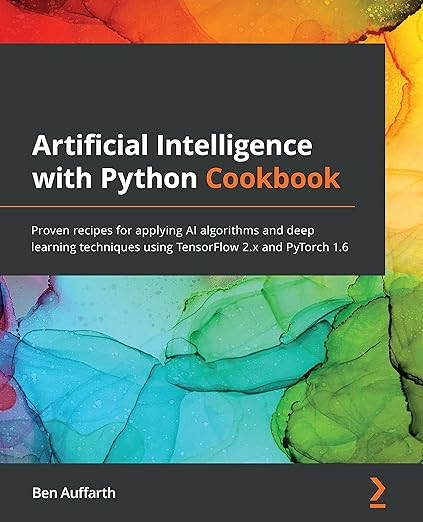
Artificial Intelligence with Python Cookbook
Published: October 2020 | BookAuthority Best-Seller
Proven recipes for applying AI algorithms and deep learning techniques
Proven recipes for applying AI algorithms and deep learning techniques using TensorFlow and PyTorch. The practical cookbook approach provides ready-to-use solutions for common AI challenges, from computer vision to natural language processing, with complete code examples and detailed explanations of implementation considerations.
Focus areas include:
Vorträge & Bildung
The GenAI Build Lab: Build Production-Ready RAG with Open Models
Packt Publishing, 2026
Focus: Produktionsreifes RAG auf kleinen offenen Modellen: hybride Suche und Reranking, korrigierendes Retrieval, RAGAS-Evaluierung und offene Guardrail-Modelle
Designing secure, customised, and sovereign LLM workflows
DataFest Tbilisi 2025
Focus: Workshop zu kaskadierten Agenten-Pipelines, grammatikgesteuerter strukturierter Ausgabe, Guardrails und Golden-Set-Auswertung auf lokaler CPU
Zur VeranstaltungsseiteWhy open-source LLMs are the future of enterprise AI
DataFest Tbilisi 2025
Focus: Von öffentlichen APIs zu Open-Source-Modellen im eigenen Rechenzentrum, und wo kleine Sprachmodelle hineinpassen
Zur VeranstaltungsseiteMoving Beyond Statistical Parrots: LLMs and Their Tooling
Put Generative AI to Work 2023, ODSC 2024, Data Science Week Amsterdam
Focus: Open-Source-LLMs und Unternehmensimplementierung
Future of Data Science and LLMs
PyData London 2023
Focus: Podiumsdiskussion über Open-Source-KI-Technologien
Experimentation at Scale at loveholidays
RE•WORK, 2023
Focus: Dutzende gleichzeitige A/B-Tests auf einer eigenen Plattform, mit geringer Verzerrung und kurzer Verzögerung
Aufzeichnung ansehenMastering Machine Learning Techniques for Time-Series Analysis
PyData Bristol 2023
Focus: Merkmalsextraktion, Prognose und Anomalieerkennung für Zeitreihen in Python
Folien ansehenTime-Series Development
University of Oxford 2023
Focus: Gastvorlesung im Kurs Artificial Intelligence: Cloud and Edge Implementations
Strategic AI Implementation
Data & Analytics Summit EU 2022
Focus: KI-Strategie und Implementierungs-Roadmaps für Unternehmen
Time-Series in Python: Preprocessing and ML
ODSC 2022
Focus: Machine-Learning-Techniken für Zeitreihendaten
ML: The Good, The Bad and the Ugly
DataFest Tbilisi 2019
Focus: Wo maschinelles Lernen in der Produktion liefert und wo es schiefgeht
Podcast-Auftritte:
- The agent autonomy trap (Agent Engineering, August 2026)
- What makes an ideal job candidate (Would You Data Scientist, Januar 2022)
- Time series prediction (Data Professor, Januar 2022)
Sie suchen jemanden für eine Konferenz, eine interne Session oder einen Podcast? Wir übernehmen einige pro Jahr, zu generativer KI, MLOps und Zeitreihen. Kontakt aufnehmen