 Chelsea AI Ventures
 Production AI your team can run, built on your data.
Most AI pilots never get past the demo. Ours start with a four-week, fixed-price proof of concept that ends in a measured go or no-go. Then we build it on your cloud or your own hardware, so you own the models, the data and the running costs. Fintech, HR tech, travel and more.
Results from production systems
Figures from four client systems we built and deployed. Each one is written up in full, with how it was measured, in our case studies.
£3.2M
Annual fraud losses prevented
92%
Fraud prevented
22%
Conversion uplift
100k+
Credit decisions scored daily
Companies we've worked with
Established companies across fintech, HR tech, and travel have put our machine learning into production.






What went wrong last time, and what happens here
Six complaints from first calls and practitioner forums, in the words people use. Open one to see how we work so it does not happen again.
The demo was impressive. Eighteen months later it is still a demo.
Four weeks, fixed price, and a written go or no-go with the measurements behind it. No-go is a real outcome, it has happened, and the client kept the report.
How the first six weeks runNobody wrote down what it was supposed to return, so nobody can say whether it did.
We write down what the process does today, what number would count as success, and who signs it off. The system is then scored against that, before anyone draws a conclusion.
92% of fraud blocked at a 0.7% false-positive rate, measuredIt works about 80% of the time, so nobody trusts it, and once it made something up in front of a customer.
Every build has an evaluation set of known inputs and expected outputs. We cut the system's autonomy until the variance left is small enough to accept, with a human sign-off on anything irreversible.
How we make agents reliableThe proof of concept ran on hand-picked rows. Production met the real warehouse, and the budget doubled.
The written scope names the tables, the labelled examples and who owns access. If cleaning the data is most of the job, the quote says so, and milestones are tied to the state of the data rather than to dates.
Data engineering and AI readinessThe consultants left. Six months on, nobody in the building can change what they built.
Either your engineers build it with weekly architecture reviews, or we build it and hand over the code, the documentation and the retraining procedure, with training for the people who will run it.
Fractional head of AIThe API bill grew with every user, and the data went somewhere the compliance team could not see.
Deployed in your account, a private cloud or on your own servers, on a sovereign model you own. A fixed capability gets cheaper every year, a per-token frontier model does not, and nothing is trained on your data for anyone else.
90x lower latency on the client's own CPU serversHow common the last project is, from three published surveys:
-
95%
of enterprise generative AI pilots showed no measurable profit-and-loss impact
MIT NANDA, State of AI in Business 2025 -
46%
of AI proofs of concept were scrapped before production, on average, in 2025
S&P Global Market Intelligence, 2025 -
77%
of UK businesses using AI report no measurable change in revenue
DSIT AI Adoption Research, 2026
The questions we put to every proposal, including our own, are written up as a checklist you can use before funding anything. Ten questions to ask before you fund an AI pilot
Where are you right now?
Four ways this usually starts. Pick the one that sounds like your week.
-
We think this could work, but we need proof before we can get budget approval.
A fixed-price proof of concept in 3 to 4 weeks, built on our infrastructure so your IT security queue is not on the critical path. It ends in a go or no-go with the measurements behind it.
Validation phase -
We want you as the brain of the project, doing architecture and guiding our team.
Weekly architecture and review sessions. Your engineers build it, we are accountable for the technical calls, and the knowledge stays with you.
Fractional CDO and advisory -
The timeline has to work with the budget. We need something tangible with clear milestones.
Two-week milestones with a working demo at each one. Deployed on AWS or GCP, with private VPC and on-premise where the data has to stay put.
Development and implementation -
The board has approved an AI budget and we cannot say in one sentence what it is for.
A written view on what to fund, defer, or stop, and what each would have to return. Due diligence on a programme, an acquisition, or a vendor demo.
Strategic AI and data advisory
From the first call to a result you can measure
What the first six weeks look like, and what each step costs before you commit to the next one.
- Day 0 A 30-minute call
You describe the problem. We tell you whether we can help, and say so plainly when we cannot.
No obligation - Within a week A written scope
What we would build, what it needs from you, and a fixed price. Or a short note saying this is not worth doing.
- Weeks 1 to 4 Validation
A proof of concept with weekly milestones, built on our infrastructure so an IT security review is not on the critical path.
Fixed price - End of week 4 Go or no-go
A decision with the measurements behind it. No-go is a real outcome and it has happened.
- Then: we build it
We write it, integrate it and put it into production on your infrastructure.
- Two-week milestones, with a working demo at each one
- AWS, GCP, private VPC or on-premise where data sovereignty requires it
- Risk is shared between both sides
- Or: your team builds it
We design the architecture and review each sprint. Your engineers write the code and keep the knowledge.
- Sprint-by-sprint guidance and reviews
- Knowledge transfer to your team
- Weekly cadence, with clear ownership boundaries
Why we build rather than configure
Three things a bespoke system does that a subscription cannot. Each one is measured on a client system and written up in full.
- <300ms Fast enough to sit inside the transaction
A model tuned to one job runs in the request, not after it. The decision engine scores over 100,000 credit decisions a day inside 300 milliseconds.
Real-time decision engine - £3.2M Trained on your data, not the average
Fraud patterns are specific to a business. A model built on one client's own transaction history prevented £3.2M of losses a year, while flagging 0.7% of legitimate transactions.
Enterprise fraud detection - Yours The model, the data and the bill stay with you
Deployed on your cloud, your private VPC or your own hardware. No third party holds the data. A fixed capability gets 5 to 10 times cheaper a year; running the frontier model of the day gets 3 to 18 times dearer.
AI security and deployment
What we build on
We work in the modern data and AI stack rather than a single vendor's version of it. AWS is the one formal partnership we hold; Google Cloud is our preferred platform and everything else here is a tool we use daily.
Cloud
- AWS Partner
- Google Cloud
- On-premise and private VPC
LLM and agent engineering
- Anthropic
- LangChain
- LangGraph
- LlamaIndex
Modelling and training
- PyTorch
- TensorFlow
- TFX
Data platform
- dbt Labs
- Fivetran
- Apache Airflow
Analytics
- Custom analytics and audit tools
Naming a tool here means we have shipped production systems with it, not that we resell it. AWS Partner is a formal status; the rest are the things we reach for, and we will use yours where you already have one.
We go deep in every sector. Travel, for example.
For travel operators, that means itinerary drafting, enquiry triage, demand forecasting, and marketing attribution, with your team owning the models: see what that looks like in travel, the rest of our services, or the work itself. We bring the same depth to fintech, HR tech, and beyond.
Technical Expertise You Can Trust
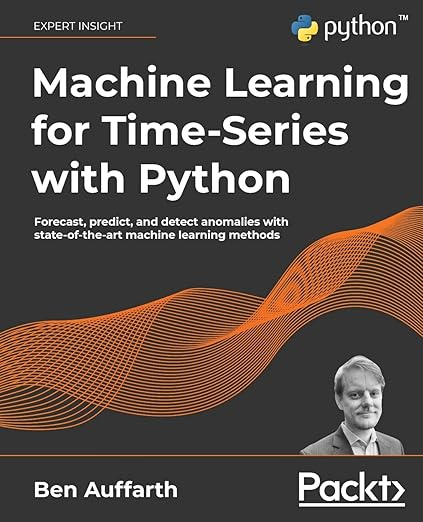
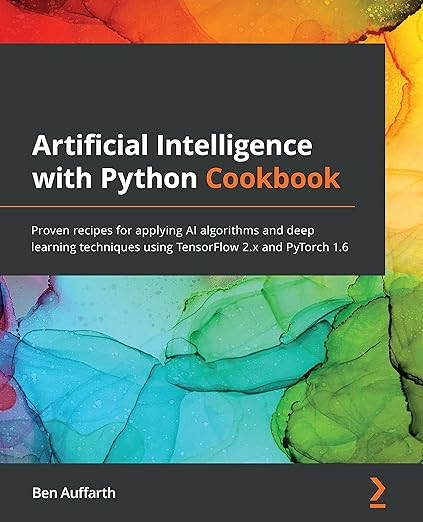
Our bespoke solutions are backed by technical depth documented in published books by our director


Before you book the call
Six questions we are asked before a first call, answered the way we answer them on it.
What does a proof of concept cost?
A fixed price for a scope we agree together, quoted in writing within a week of the first call. The scope decides the number, which is why there is no price list here: email us or book a call. You pay per two-week milestone and can stop at any of them.
How long before we see something working?
A written scope within a week. A working proof of concept by the end of week four, with a milestone every week on the way. After the go decision, two-week milestones, each with a demo you can use.
What if it turns out not to work?
Then you find out at week four instead of month eight. The no-go report says why, what would have to change, and what to do instead. It has happened, and the client kept the report, the evaluation set and the data work.
Our last consultants left and nobody could run what they built. How is this different?
Two ways to work, and both leave the knowledge with you. Your engineers build it with us reviewing every sprint, or we build it and hand over the code, the documentation and the retraining procedure, with training for the people who will run it. The person you speak to on the first call is the person who writes the code.
Why not a large consultancy, or an offshore team?
You speak to the people who write the code: a small team led by a director with a PhD and published books on generative AI, MLOps and time series. There is no account layer, no bench of juniors, and no handover between the person who sold it and the person who builds it.
Do you work outside London?
Yes. We are in London and work remotely across the UK and Europe. Where data protection rules mean the data cannot leave the jurisdiction, we deploy on a private cloud or on infrastructure you host, in the country you choose.
Bring the project that stalled
A 30-minute call with Ben Auffarth. You describe the problem; we tell you whether we can help, and say so plainly when we cannot.